
Zhejiang Robot Industry Association
Zhejiang University Robotics Institute
Golden Conference & Exhibition Group
Hangzhou Wisdom Source Exhibition Co., Ltd.
Hangzhou Sequoia Exhibition Co., Ltd.
Ningbo Magnetic Materials Association
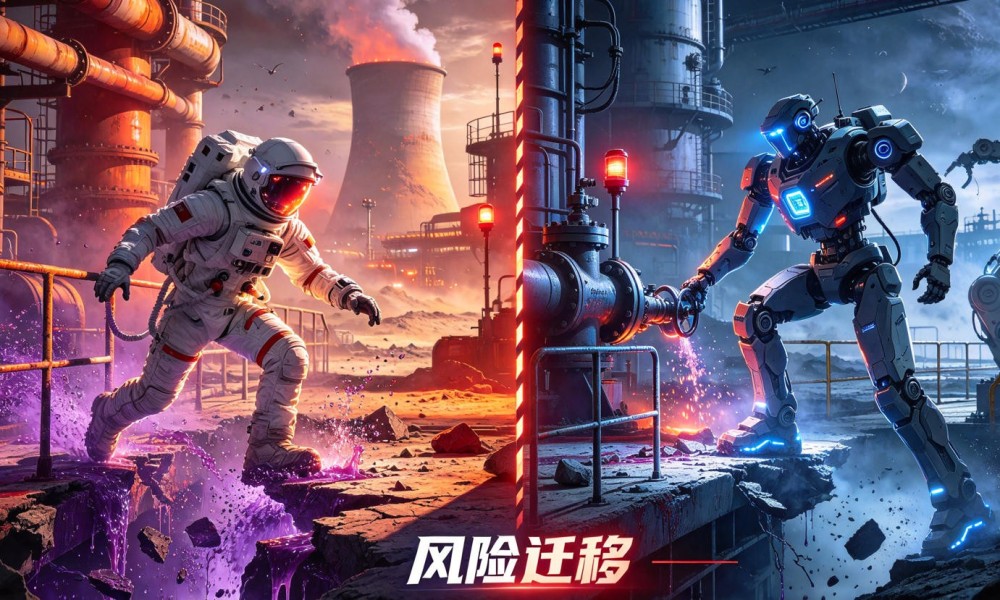
The race to put a useful, general-purpose body into the world's most punishing environments has quietly moved past the factory demo. Today the most ambitious deployments under discussion are not in warehouses but in orbit, in reactor buildings, on the seabed, and across the lunar regolith. This shift sits at the center of industry conversation as The 3rd Hangzhou International Humanoid Robot and Robot Technology Exhibition 2027 (HRTE 2027), taking place May 27–29, 2027, at the Hangzhou Grand Convention and Exhibition Center in Zhejiang Province, where manufacturers, research institutes, and end-users are expected to converge on exactly this question: what does it take to make a humanoid that survives where humans should not go?
The premise is simple to state and hard to achieve. A humanoid robot is, by design, a machine shaped to operate in spaces built for human bodies — and many of the harshest environments on and off Earth are also human-shaped: ladder rungs on a station module, control panels in a decommissioned reactor, a hatch on a lunar habitat, a valve in a flooded mine. Wherever the world was built to human proportions, a two-armed, bipedal or wheeled-and-dexterous platform may fit more naturally than a bespoke rover or drone. The rest of this article examines why extreme environments are emerging as the humanoid's most compelling frontier, what the technical and supply-chain realities are, and what it means for the organizations that will ultimately buy and operate these machines.
The first argument for humanoids in extreme environments is moral and economic rather than technical: humans are expensive and risky to send into the worst places. Sending a person into low Earth orbit costs orders of magnitude more than sending hardware, and the person still needs air, water, radiation shielding, and a return ticket. Inside a nuclear facility, the unit of risk is measured in dose limits and decades of health exposure. In deep-sea and underground mining, the dangers are pressure, collapse, toxic gas, and isolation. In disaster zones, the hazard is unpredictable and often lethal.
Humanoids do not eliminate risk, but they relocate it. A damaged robot on the lunar surface is a lost asset; a damaged astronaut is a tragedy. This asymmetry is what makes "send the machine first" such an attractive doctrine. Because humanoids are designed around the human form factor, they can, in principle, use the same tools, climb the same stairs, and reach the same valves that a person would — without requiring the environment to be re-engineered around a robot's peculiar shape. That compatibility is precisely why specialized robotic arms and drones have already found niches in these settings, and why general-purpose humanoids are now being considered as a complementary layer rather than a replacement.
Space is the clearest long-horizon market for extreme-environment humanoids, and public agencies have studied it for years. NASA's humanoid research lineage — often associated with the Valkyrie-class robot developed at Johnson Space Center — was conceived explicitly to explore how a robust, dexterous, human-scale robot could support deep-space missions. According to public reports, the agency has framed such platforms as precursors that could perform maintenance and setup tasks ahead of, or in support of, crewed exploration.
The logical chain runs like this. On the International Space Station, a share of astronaut time is consumed by routine maintenance, inspection, and housekeeping — work that could in principle be offloaded to an onboard humanoid, freeing crew for science. Agencies have stated that reducing the "astronaut as maintenance technician" burden is a recurring goal. Beyond Earth orbit, the case strengthens. For a lunar base, the "robot first, human later" logic is difficult to refute: autonomous or remotely operated humanoids could begin site preparation, module connection, and infrastructure checks before any boots arrive, turning a landing site into a working outpost ahead of schedule.
The most compelling space use case is in-situ resource utilization (ISRU) — extracting water, oxygen, and building materials from local regolith and ice. ISRU is repetitive, physically demanding, and takes place in a radiation- and dust-filled environment that is hostile to unaugmented humans. A humanoid configured for tool use could tend machinery, swap components, and extend the reach of a fixed ISRU plant. Public reports from multiple space programs suggest that such "early infrastructure robots" are treated as a serious intermediate step toward sustained off-world presence, not science fiction. The phrasing matters: agencies have researched and prototyped, but the path from lab demonstrator to flight-qualified system remains long.
While space captures the imagination, the nearer-term volume of extreme-environment work is terrestrial. Nuclear decommissioning is perhaps the most cited example. Across aging reactor fleets in North America, Europe, and Asia, large amounts of hazardous material must be characterized, cut, packaged, and moved. Remote manipulators and telerobots already do much of this. Industry estimates suggest the decommissioning backlog represents decades of work, and humanoids are positioned to complement existing tools by handling unstructured tasks — a fallen panel, an unexpected obstruction, a door that must be unlatched — where pre-programmed machines struggle.
Hazardous-facility inspection is a quieter but steady market: chemical plants, refineries, and power stations all require periodic inspection of pipes, flanges, and confined spaces. Here the humanoid's value is presence in a human-built space without putting a worker in a respirator. Deep-sea and underground mining extend the same logic downward. Remotely operated vehicles dominate subsea work, and autonomous drills dominate mining, but both leave unstructured intervention gaps — a jammed mechanism, a sample to be collected, a survey of a space never designed for a machine. Humanoids, equipped with the right grippers and sensors, could fill those gaps while keeping people out of the most dangerous zones.
Moving a humanoid from a controlled lab to an extreme environment changes the engineering problem completely. Four demands recur across every domain.
First, radiation tolerance. In space and around reactors, ionizing radiation degrades electronics and sensors. Components must be selected or shielded for the expected dose, and software must tolerate bit-flips and transient faults. Second, thermal management. Lunar days and nights swing hundreds of degrees Celsius; deep-sea pressures and reactor heat load stress cooling and sealing. A humanoid's joints and compute must keep operating where a laptop would simply shut down.
Third, autonomy under latency and blackout. A robot on the Moon cannot rely on a continuous, low-latency link to Earth; round-trip commands may take seconds and drop out entirely. Deep-sea and underground settings suffer comms blackouts by geometry. This forces genuine onboard autonomy — perception, planning, and failure recovery that do not require a human on the loop at every step. Fourth, ruggedized actuators and power density. The same motors that must be gentle enough to grasp an egg must also survive dust ingress, shock, and long duty cycles, while drawing from a power source light enough to carry. These are not separate problems; they compound, and solving them for extremes tends to raise the floor for terrestrial performance as well.
A crucial but underappreciated point is that extreme-environment humanoids are not a separate species. They are the beneficiaries of accelerating terrestrial humanoid development. Every improvement in affordable torque-dense actuators, in high-energy-density batteries, and in embodied-AI control stacks — the ability of a model to perceive, plan, and act in the physical world — lowers the cost and raises the capability of the machines that might later be hardened for space, sea, or reactor.
This is where manufacturing geography matters. The maturity of the broader robotics and electronics supply chain, including the dense Yangtze River Delta cluster centered on Hangzhou and neighboring cities, gives the humanoid industry a fast iteration cycle: component suppliers, contract manufacturers, and AI software teams in close proximity shorten the loop between a design change and a working prototype. Industry estimates suggest that a significant and growing share of the world's robotics components and assembly capacity traces back to Chinese manufacturing networks, and the Hangzhou region in particular has become a notable node for robotics firms, sensor makers, and automation supply. That concentration of capability is precisely what extreme-environment programs, wherever they are based, will draw upon indirectly through commercial off-the-shelf progress.
For all the momentum, the gap between promising demonstration and deployable system is substantial. Reliability is the first wall. An extreme environment offers no easy repair; a failure far from help is often a total loss. Achieving the mean-time-between-failure figures that operators will trust requires testing regimes the industry is only beginning to build.
Certification is the second. Nuclear, aerospace, and subsea operators answer to regulators, and a robot cannot simply be "probably fine." Demonstrating safety, fail-safe behavior, and predictable performance under specified conditions is a multi-year, document-heavy undertaking. The "last meter" of dexterity is the third: general manipulation — recognizing an unfamiliar latch, routing a cable, improvising around an unexpected obstacle — remains harder than scripted motion, and extremes are full of the unexpected. Cost is the fourth. Today's capable humanoids remain expensive, and hardening them for radiation, pressure, or vacuum multiplies the bill. Until volumes rise and supply chains mature, extreme-environment units will be premium instruments, not commodity tools.
The implications differ by stakeholder. Space agencies should treat extreme-environment humanoids as infrastructure for presence: a way to do more with fewer crewed hours and to begin building off-world before humans arrive. Energy and utility operators — especially nuclear and petrochemical — should track humanoids as a complementary tool for the unstructured, hazardous tasks that today still require suited workers, and should begin the long process of specifying requirements and certification pathways now. Mining firms should watch subsea and underground use cases as a route to safer, more continuous operations in zones that are hard to staff.
For investors, the signal is structural rather than hype-driven. The durable value may lie less in any single humanoid brand and more in the supply chain beneath them — actuators, batteries, sensors, simulation software, and the manufacturing ecosystems, including the Yangtze River Delta and Hangzhou cluster, that turn designs into shippable units. Those layers improve with terrestrial volume and pay off doubly when the same components are selected for hardened extreme-environment variants.
Humanoid robots beyond Earth are not a single leap but a stack of incremental wins — in actuators, in autonomy, in certification, and in the quiet maturity of a global supply chain. The organizations that take the "robot first" doctrine seriously, and that invest in the unglamorous work of reliability and compliance, will be the ones ready when the first humanoid tightens a valve on the Moon, inspects a reactor wall without a human in the room, or retrieves a sample from the deep. That future is close enough to plan for, and the place to see the enabling technology assembled in one venue is HRTE 2027 — The 3rd Hangzhou International Humanoid Robot and Robot Technology Exhibition 2027, taking place May 27–29, 2027, at the Hangzhou Grand Convention and Exhibition Center in Zhejiang Province — where the companies building the parts, platforms, and autonomy behind extreme-environment readiness will be on the floor.