Zhejiang Robot Industry Association
Zhejiang University Robotics Institute
Golden Conference & Exhibition Group
Hangzhou Wisdom Source Exhibition Co., Ltd.
Hangzhou Sequoia Exhibition Co., Ltd.
Ningbo Magnetic Materials Association
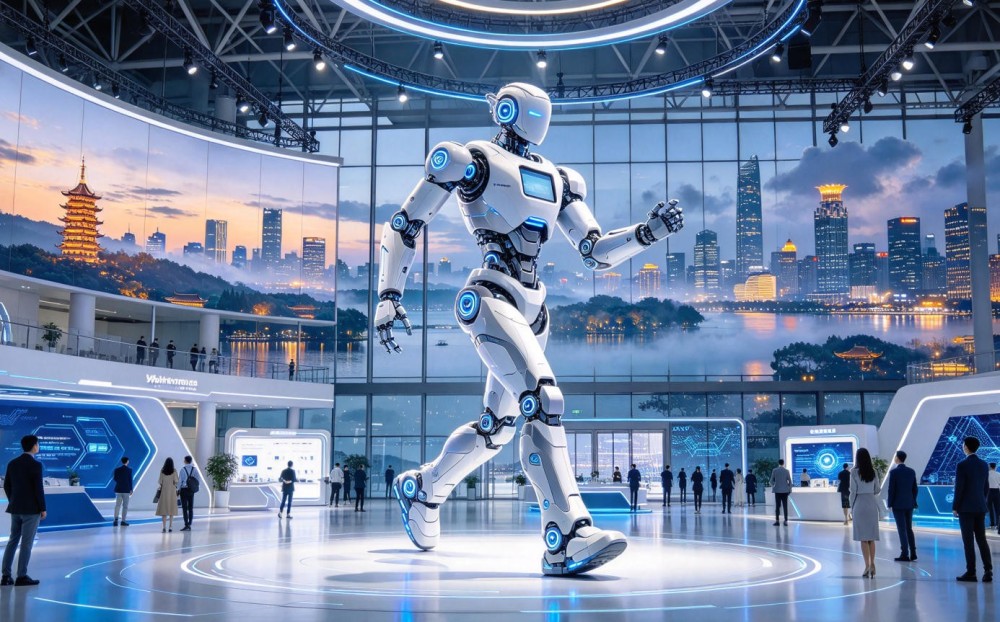
From Tea Fields to Test Tracks: A New Industrial Identity Takes Shape
Hangzhou has long been known for two exports: tea and e-commerce. Over the past decade, it added a third — digital economy platforms that reshaped how the world thinks about payments and logistics. Now, according to public reports and a steady stream of industry coverage, the city is writing a fourth chapter: humanoid robots.
The shift did not happen overnight. The Yangtze River Delta — anchored by Shanghai and stretching through Zhejiang and Jiangsu provinces — already ranked among the world's densest manufacturing regions, with deep competence in precision machining, electric motors, sensors and consumer electronics. What changed in the last three to four years is that this industrial base collided with a new wave of artificial intelligence, and the result is embodied intelligence: machines that perceive, decide and act in physical space.
The timing mattered. As one of China's designated hub cities for the national robotics agenda, Hangzhou benefited from provincial and municipal programs that encouraged startups, research labs and manufacturers to co-locate. Industry estimates suggest that within a few years, the city moved from having a handful of robotics research groups to hosting a recognizable cluster of humanoid robot developers, supported by a supplier network that spans the wider delta.
The question worth asking is not simply why Hangzhou produces humanoid robots — several Chinese cities now do — but why the ecosystem here has developed such unusual breadth, speed and cohesion.
The Company Ecosystem: A Full Spectrum, From Full-Body Humanoids to Dexterous Hands
Companies headquartered in Hangzhou now span nearly every layer of the humanoid robot stack, a fact that has made the city a recurring reference point in global industry analysis.
At the flagship level, Unitree Robotics — which grew out of Zhejiang University's robotics lineage and made its name in quadruped robots — has become one of the most visible humanoid robot makers in the world. Its full-size and compact humanoids have appeared in televised performances, industrial demonstrations and overseas research labs, and its aggressive pricing has been credited, in many public reports, with forcing the entire industry to rethink cost structures.
Around it, a second ring of specialists has formed. Deep Robotics, also based in Hangzhou, has pushed quadruped and wheeled-legged platforms into industrial inspection and emergency response scenarios. Agibot — the embodied AI venture founded by a former Huawei executive and headquartered in Shanghai's Pudong, with operations and production facilities in Hangzhou's Xiaoshan district — illustrates how tightly the Hangzhou–Shanghai axis now functions as a single talent and manufacturing corridor. CloudMinds, which pioneered cloud-controlled humanoid service robots, relocated its headquarters to Hangzhou, adding a distinct architecture philosophy — brains in the cloud, bodies on the ground — to the local mix.
Beyond the full-body players, Hangzhou has quietly become a capital for component-level innovation. Companies such as Linkerbot and other university-spun ventures are working on dexterous hands, lightweight actuators and force-controlled joints. Heuristic (Qunhe) Robotics applies embodied intelligence to commercial service settings. And at the perceptual layer, Hangzhou's existing strengths — from LiDAR and vision sensing to the city's large pool of AI software engineers — give humanoid developers an unusually short feedback loop between prototype and part.
The pattern is important for outside observers: this is not a one-champion story. It is a layered ecosystem in which full-stack robot makers, subsystem specialists and component suppliers can all find partners within the same metropolitan area.
Supply Chain Density: The Competitive Advantage of Proximity
Ask any hardware founder what constrains iteration speed, and the answer is rarely software. It is the ability to walk into a supplier's factory, argue about tolerances, and have a revised machined part on your bench the next morning.
This is where the Yangtze River Delta's manufacturing depth converts directly into robotics speed. Within a radius of roughly a hundred kilometers around Hangzhou, the delta offers precision casting and CNC machining, motor and reducer production, harmonic drive assembly, battery and power electronics, sensor and camera module fabrication, and mature electronics integration. Local government announcements indicate that Zhejiang Province has actively cultivated this robotics supply chain through industrial parks and specialized robot industry zones, encouraging component makers to align with the needs of emerging humanoid developers.
The consequences show up in three ways:
Iteration speed. Multiple industry reports describe Hangzhou-area humanoid teams compressing design-build-test cycles to weeks rather than months, precisely because parts, tooling and assembly expertise are locally available.
Cost structure. Competition among nearby suppliers — combined with scale effects from adjacent industries such as drones, e-bikes and consumer electronics — has helped push humanoid bill-of-materials costs down faster than many analysts predicted.
Manufacturing readiness. Several humanoid companies in the region operate or partner with their own production facilities, meaning the path from "demo on stage" to "units shipping to customers" is measurably shorter.
For global buyers, this density is the single most practical reason to engage with the Hangzhou cluster: it is where design ambition and manufacturing reality sit closest together.
Embodied AI Talent: When Universities, Labs and Startups Share a City
Hardware alone does not explain the cluster's momentum. The other half of the story is talent — and specifically, the intersection of AI research and robotics engineering that practitioners call embodied intelligence.
Zhejiang University, one of China's top engineering universities, has anchored the city's robotics talent pipeline for decades, and its alumni network runs visibly through many of the companies named above. Hangzhou also hosts major research institutions focused on intelligent computing and intelligent robotics, such as Zhejiang Lab, alongside a growing set of corporate research centers.
Two further ingredients deserve mention. First, Hangzhou's digital-economy history means the city has an unusually large pool of software engineers, computer vision specialists and cloud infrastructure veterans — precisely the people humanoid companies need as robots move from teleoperated demos to AI-driven autonomy. Second, local government announcements indicate deliberate talent policies: housing support, startup grants and streamlined incentives aimed at attracting both returning overseas researchers and graduates from across China's top universities.
The result, as several international observers have noted, is a city where a robotics PhD, an AI engineer and a precision-machining supplier can all be found within the same commute radius. That kind of co-location is difficult to replicate, and it compounds over time.
Policy Support: Patient Capital and Deliberate Industrial Design
Government policy has played a visible — though not always loud — role in shaping the cluster.
Zhejiang Province and the Hangzhou municipal government have issued successive action plans targeting the humanoid robot and embodied intelligence industries, typically combining three instruments: funding, facilities and demand. Funding comes through dedicated industry funds and guidance vehicles that invest alongside private capital; local media reports describe provincial-level funds running to billions of yuan for intelligent robotics. Facilities come through specialized industrial parks — Xiaoshan, Yuhang and other districts have each designated zones where robot companies can access production space, testing grounds and shared services. Demand comes through scenario-opening programs, in which government agencies, state-owned enterprises and public institutions commit to piloting robots in real operations, from logistics and inspection to public services.
Two features of this policy style are worth highlighting for an international audience. First, it is regionally coordinated: Shanghai, Zhejiang, Jiangsu and Anhui policies are increasingly designed with awareness of each other, so a humanoid company can draw on the delta as an integrated base rather than navigating four separate ecosystems. Second, it is patient: support is structured around multi-year capability building — supply chains, standards, talent — rather than one-off subsidies, which reduces the boom-and-bust risk that has accompanied robotics hype cycles elsewhere.
Policy, in other words, is not the whole story. But in Hangzhou it has functioned as scaffolding: strong enough to accelerate the build-out, light enough to let company-level competition drive the real innovation.
From Factory Floors to Storefronts: Where the Robots Are Actually Going
Ecosystems earn their keep in deployment, and the Yangtze River Delta is emerging as one of the world's richest testing grounds for humanoid applications.
In manufacturing and logistics, the first serious commercial footholds are appearing. Industry estimates suggest early deployments concentrate on structured or semi-structured tasks: material handling, machine tending, quality inspection and intralogistics in plants around Hangzhou, Ningbo and Suzhou. Legged platforms from local companies are already used for industrial inspection in power stations, tunnels and hazardous environments — a segment where value is proven and payback is measurable.
In services and public-facing settings, humanoid and wheeled service robots are being trialed in hotels, museums, cultural venues and government service halls. Hangzhou, which hosted the 2023 Asian Games and has positioned itself as a showcase city for digital governance, has been notably willing to put robots in front of the public — a cultural factor that matters more than it sounds, because early public exposure builds the social license these products need.
In commerce and entertainment, the cluster has generated attention well beyond industrial circles. Televised robot performances, marathon-style robot races and retail demonstrations have made humanoid robots a mainstream consumer topic in China, and several Hangzhou-linked companies have turned showmanship into order books, with performance and education versions of their platforms selling domestically and abroad.
The trajectory is familiar from earlier Chinese technology sectors: start with demonstrations, earn early revenue in niche deployments, then scale as costs fall and reliability improves. What distinguishes the current moment is how quickly the delta's manufacturers are moving from pilot to procurement — local reports describe factories explicitly budgeting for embodied-AI equipment in upcoming capital expenditure cycles.
What It Means for Global Buyers, Integrators and Investors
For overseas decision-makers, the rise of the Hangzhou / Yangtze River Delta cluster is not a headline to admire from a distance; it is a practical shift in sourcing, partnership and investment geography.
For buyers and integrators, the cluster offers a rare combination: full-stack humanoid platforms at globally disruptive price points, specialized subsystems (dexterous hands, actuators, sensors) available from specialist vendors, and a supplier base accustomed to fast iteration. Integrators evaluating humanoid deployments would be well advised to audit Hangzhou-area suppliers alongside the established Japanese, European and American options — not as a replacement, but as a benchmark for capability-per-dollar.
For investors, the cluster's maturation changes the diligence calculus. Supply chain density, university pipelines and policy continuity are exactly the structural factors that predict ecosystem durability — and, as with drones and EVs before, they suggest that cost and speed advantages here are systemic rather than accidental. The sensible posture is engagement: attend, meet the companies, test the hardware, and build relationships before valuations reprice.
For everyone, the deeper signal is that embodied AI is entering its industrialization phase, and industrialization always concentrates somewhere first. For humanoid robots, that somewhere increasingly looks like the delta — with Hangzhou at its most dynamic edge.
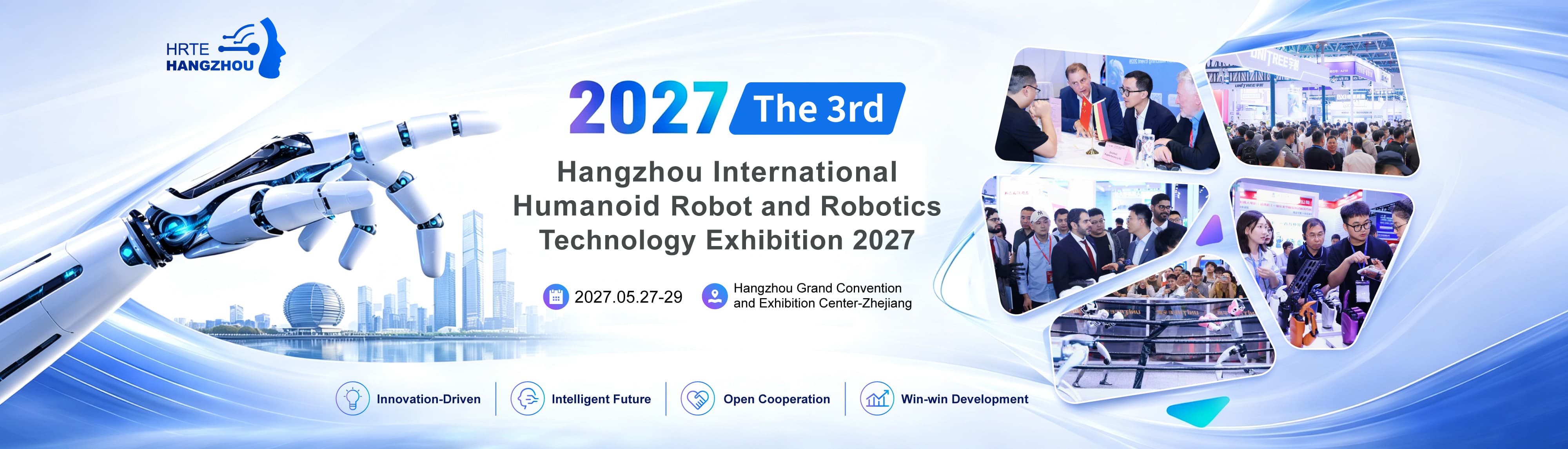
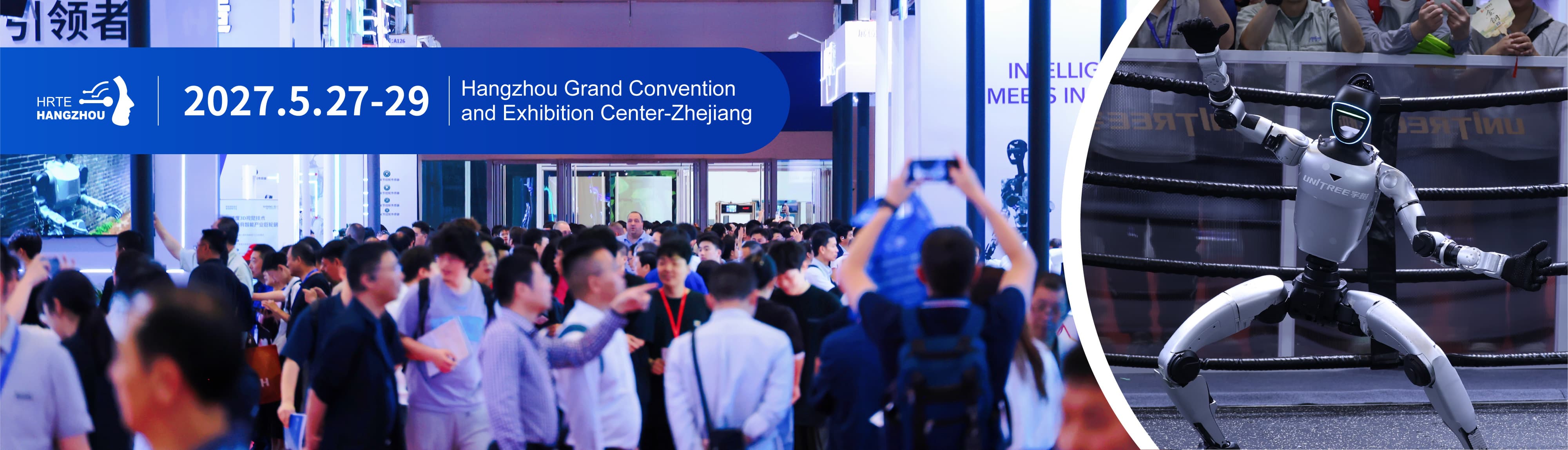
For those who want to see this ecosystem firsthand rather than read about it, the calendar offers a natural entry point. The 3rd Hangzhou International Humanoid Robot and Robot Technology Exhibition 2027 (HRTE 2027), taking place May 27–29, 2027, at the Hangzhou Grand Convention and Exhibition Center in Zhejiang Province, will bring together the region's humanoid developers, component suppliers, research institutes and application customers under one roof. Whether you are a buyer mapping the supply base, an integrator scouting platforms, or an investor looking to walk factory floors, HRTE 2027 offers the most efficient single trip into the heart of the cluster — and an invitation to be part of where embodied intelligence goes next.