Zhejiang Robot Industry Association
Zhejiang University Robotics Institute
Golden Conference & Exhibition Group
Hangzhou Wisdom Source Exhibition Co., Ltd.
Hangzhou Sequoia Exhibition Co., Ltd.
Ningbo Magnetic Materials Association
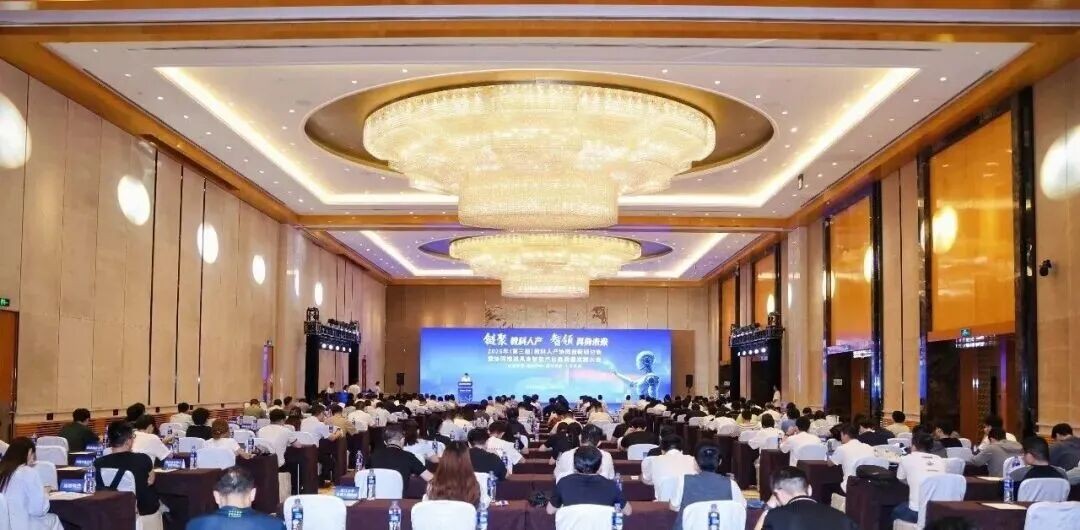
On September 19, the 3rd 2026 Symposium on Industry-Education-Research-Talent Collaborative Innovation, together with the Conference on Promoting High-Quality Development of the Embodied Intelligence Industry, was held in Qiantang. Hosted by the National Robot Innovation Center, the event was undertaken by the China (Zhejiang) Robot and Intelligent Equipment Innovation Center (Zhejiang Robot Innovation Center), Zhejiang Robot Industry Development Association and Qiantang Embodied Intelligence Industry Alliance, with China Jiliang University, Zhejiang University Robot Research Institute, Ningbo Cixing Co., Ltd. and other organizations as co-organizers.
With the theme of Linking Education, Research, Talent and Industry · Leading the Embodied Intelligence Future, the conference gathered more than 300 representatives from over 60 universities and research institutes across China, key enterprises from inside and outside the province, municipal, prefectural and county-level economy and information technology authorities, provincial key industrial technology alliances, as well as national and provincial manufacturing innovation centers. Participants jointly explored pathways for the collaborative development of education, research, talent and industry to boost the high-quality growth of the emerging embodied intelligence industry.
Shi Feng, Member of the Party Working Committee of Qiantang New Area, Member of the Standing Committee of the District Party Committee and Member of the Party Group of the District Government, and Du Zhenjun, Director of the National Robot Innovation Center, delivered speeches at the event.
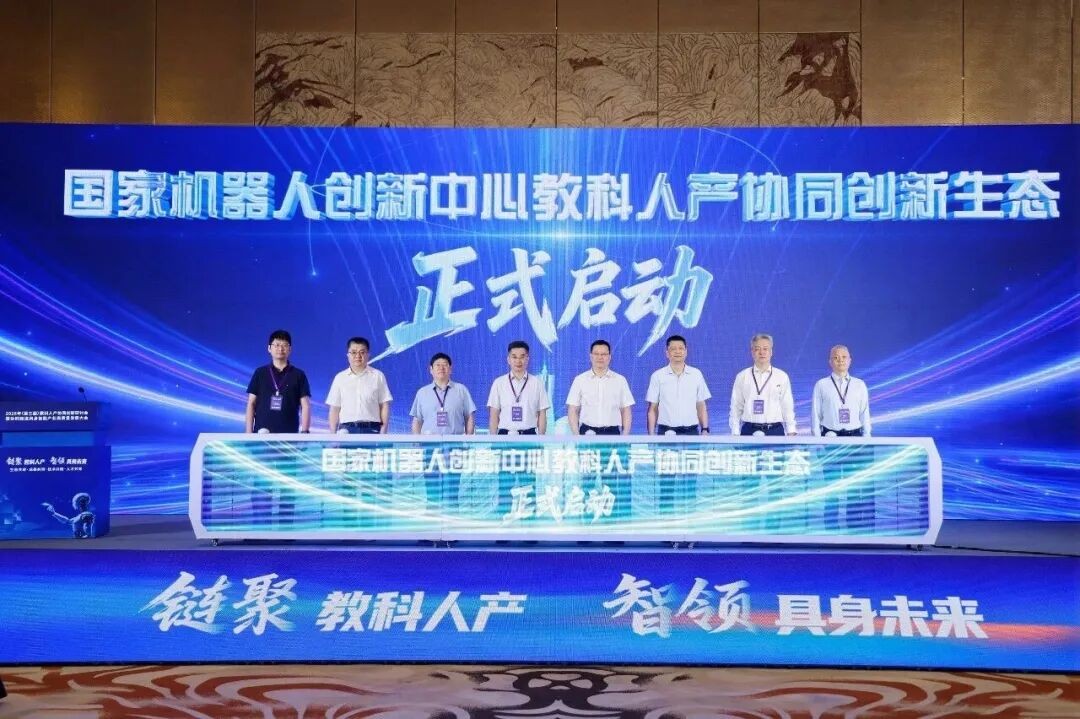
During the conference, the Industry-Education-Research-Talent collaborative innovation ecosystem of the National Robot Innovation Center was officially launched. Centering on practical demands including achievement commercialization, joint technological research and industrial talent supply, the ecosystem leverages resources of the national-level platform such as research facilities, expert think tanks and pilot-scale incubation services, and rolled out a package of enabling measures to streamline collaboration between universities and enterprises.
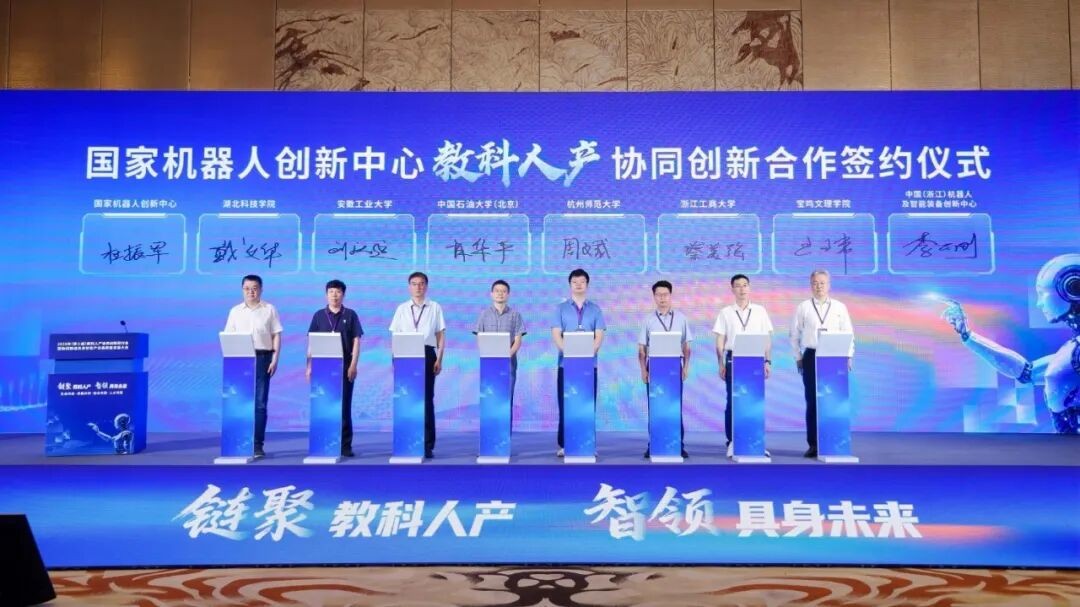
Two signing ceremonies followed immediately. Eighteen universities from across the country signed framework agreements with the National Robot Innovation Center and Zhejiang Robot Innovation Center to advance discipline development, joint talent training and research resource sharing. Three physical industry-university-research projects were officially launched: the laser welding robot system for weak-feature welds of thin-walled parts, the intelligent grinding and polishing robot system with eye-brain-hand coordination, and others. These projects will be jointly developed by Zhejiang Robot Innovation Center together with Zhejiang University of Technology, Zhejiang University Robot Research Institute together with Longli Intelligence, and China Jiliang University together with Xincontrol Intelligence respectively.
Participating experts delivered keynote reports on cutting-edge topics including prospects for the development of the embodied intelligence industry and advanced technologies of flexible electronic skin for embodied intelligence. The FEden Full-Process Industrial Embodied Development Platform was released concurrently, laying a solid industrial and technical foundation for the engineering implementation of embodied intelligence algorithms in industrial scenarios.
Focused on addressing the pain point of difficulties in translating university research outcomes into real-world applications, the conference promoted joint commercialization of research achievements. On-site, more than ten research outcomes were admitted to the repository in the first batch, including the full-body control system for humanoid robots, bionic continuum magnetic-adhesion wall-climbing robots and medical dexterous hands developed by Beihang Hangzhou Research Institute, China Jiliang University, Hangzhou Dianzi University and other institutions. Two professors from Zhejiang University and Beihang University shared successful cases of commercializing embodied intelligence research results. A call for proposals and a demand list were released during the joint R&D session to put into practice the model of “industry sets the questions, research provides the solutions”. Multiple enterprises including Cixing Co., Ltd., China Mobile and Sanhua Auto Parts released their industry-university-research cooperation demands for embodied intelligence.
To tackle the mismatch between supply and demand of industrial talent, the conference also launched a call for projects on talent development and curriculum standard formulation for the embodied intelligence sector. Representatives from leading embodied intelligence enterprises, education specialists and winners of the First Prize of the National Teaching Achievement Award exchanged ideas on talent cultivation pathways from multiple perspectives.
Separately, the launching ceremony of Zhejiang Province’s “Bring a Thousand Technologies into Enterprises (Clusters) for Commercialization” initiative and the “Reveal the List and Take on the Mission” campaign of the Robot Industry Alliance were held concurrently on the day of the event. Centering on the robot industry pilot, the first batch of “Reveal the List and Take on the Mission” releases 31 technology offers and 34 scenario-based demands. The first catalogue of advanced and applicable technological outcomes contains 59 achievements covering 15 sub-sectors.
Through institutionalized collaborative measures, the conference systematically advances joint ecosystem building, joint commercialization of research outcomes, joint technology R&D and joint talent cultivation. Leveraging the national manufacturing innovation center’s role as a bridge in platform development, resource integration and mechanism innovation, it creates a full-chain closed-loop system covering projects, technologies, research outputs, teaching faculty, practical training and talent development. The conference aims to build a national benchmark for industry-education integrated collaborative innovation in robotics and embodied intelligence, empower large-scale, ecosystem-oriented and high-quality industrial growth, and pool multi-stakeholder strengths to drive innovative development of China’s embodied intelligence industry.